

Zeuke (Zeuke & Wegwerth, Berliner TT Bahnen, Berliner TT Bahnen Zeuke GmbH, Tillig Modellbahnen GmbH)
Description
Producer of O gauge, later TT gauge model trains
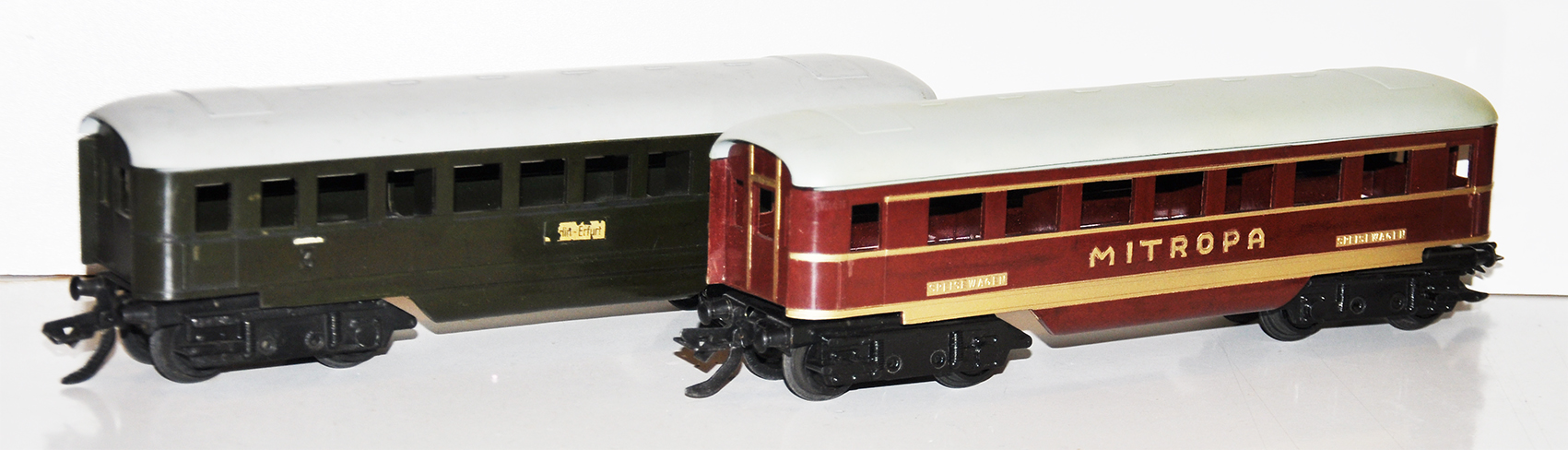
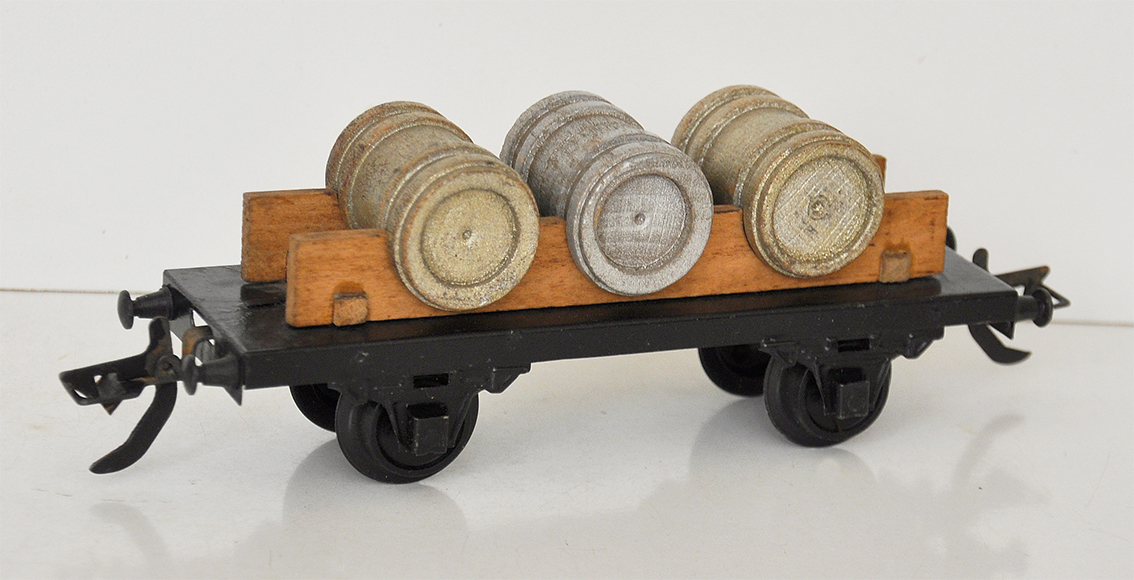
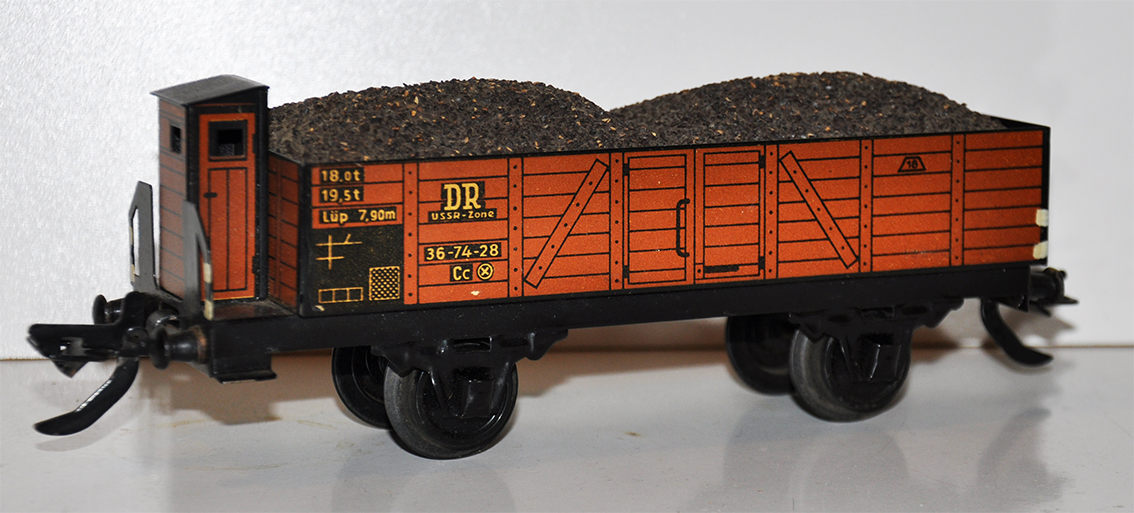
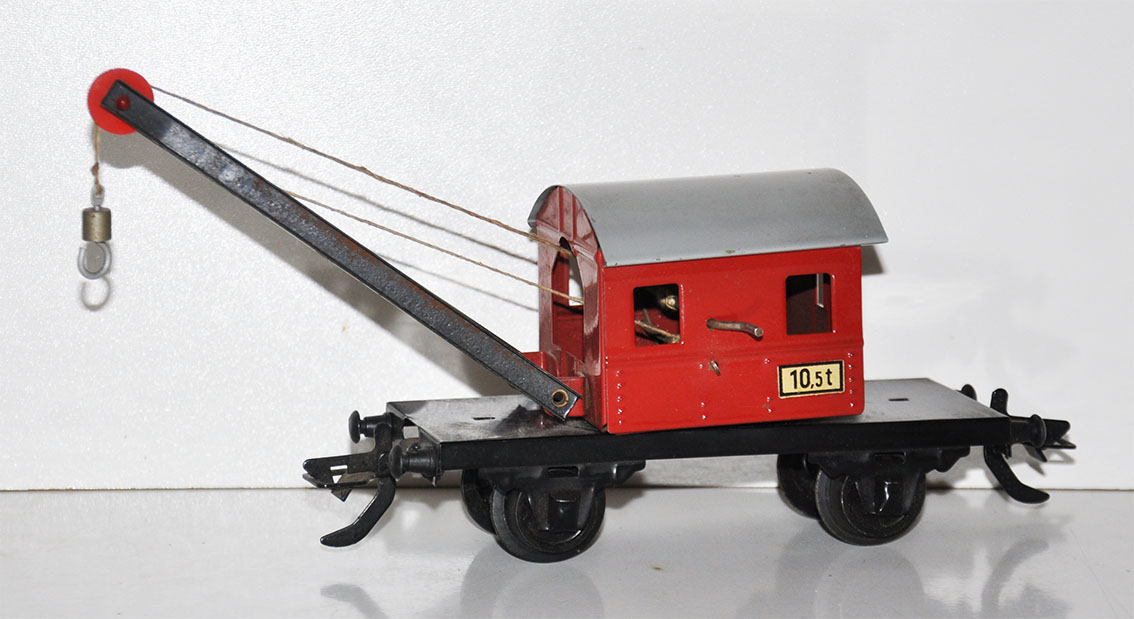
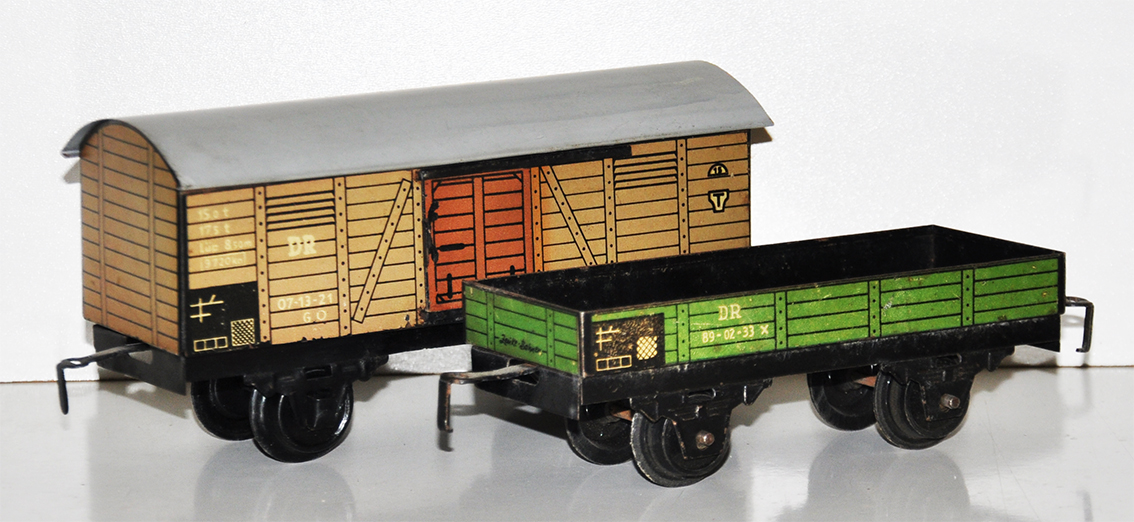
In early 1946 Werner Zeuke in Berlin offered hand-built O gauge trains with 0-4-0 locomotives made from cast aluminium and zamac and working on the traditional three-rail AC principle. Rolling stock was made from tinplate. In 1947 he teamed up with Helmut Wegwerth under the name Zeuke & Wegwerth and began series production of O gauge trains,first exhibited at the 1949 Leipzig Autumn Fair. The range now utilised a 20 V AC three-rail system with all three rails isolated from each other. It worked by having two sets of windings, one end of one winding being connected to one outside rail and one end of the other winding to the other outside rail. The other ends of both windings were taken together and connected to one of the motor brushes. The other brush was connected to the centre rail. Applying power to one outer rail and the centre rail moved the loco in one direction, applying power to the other outside rail and the centre rail moved the loco in the opposite direction. For the bodies of the locomotives and bogie coaches bakelite was used, while the four-wheel passenger and goods stock was made from lithographed tinplate. All rolling stock was fitted with buffers and Zeuke’s own automatic couplings. Top of the range was a 4-6-0, later 2-6-2 ,Borsig streamlined steam loco. Apart from the 20 V trains, Zeuke also produced O gauge battery- and clockwork-powered trains, for which the same four-wheel rolling stock was used, but without buffers and with simple hook couplings. In 1955 the O gauge range reached its peak with, besides the Borsig, an E44 electric outline loco.
In 1955 the O gauge range produced by Leibmann/Stadtilm was sold to Zeuke & Wegwert which continued to produce part of the Liebmann range.
Around this time Helmut Wegwerth left the company and in 1956 there was a state investment to develop a new TT (scale 1:120) model railway system, which was first shown
at the Leipzig Spring Fair of 1957. It was a complete model railway system with a V200 DB diesel locomotive and a class 23 steam loco together with rolling stock, track and signals. The new TT-Bahn was so successful that from 1960 on no new O gauge models were developed and production stopped in 1962.
In 1972 the company was nationalised and the name Zeuke was deleted from the TT logo. Production was continued under the new name VEB Berliner TT Bahnen (BTTB). Werner Zeuke remained as managing director, but resigned in 1974.
After the reunification of Germany in 1990, Berliner TT Bahnen was taken over by the Treuhandanstalt, as were all other state-owned companies. Werner Zeuke successfully applied for the return of his former company, which was renamed Berliner TT-Bahnen Zeuke GmbH (BTTB-Zeuke GmbH). The inventory of unsold BTTB railways had also been taken over by the trust and when the Treuhand liquidated these stocks in 1991, TT-Bahnen were offered up to 90% cheaper, causing BTTB-Zeuke GmbH's sales to collapse. Werner Zeuke resigned and the company was taken over by businessman Carlo Parisel, but ended in bankruptcy in 1993. Hans-Jürgen Tillig, owner of the Pilz company, had been developing a new model track system for Zeuke since 1991. To save his investment, he bought BTTB-Zeuke GmbH, and in 1994 moved the company location from Berlin to Sebnitz (Saxony), where the TT-Bahn is still produced today under the name Tillig Modellbahnen GmbH.
Werner Zeuke died in 2001, aged 83.
Share:

