


Maker record
Bakke finmekaniske verksted [Bakke Fine Mechanical Workshop] (Bakke)
R.W. Bakke, Finmekanisk verksted, was a Norwegian toy maker based in Oslo and founded in 1946 by Reidar Werner Bakke. From the late 1940s through the 1950s, it produced tinplate and steel mechanical toys, including clockwork train sets, trucks, ladder trucks, cars and tractors. Bakke designed the toys and made the stamping tools used in production. Early trains were made of zinc before production shifted to tinplate and steel; many toys used wind-up motors and a release mechanism to protect the spring. The workshop closed in 1962.
- Founded
- 1946
- Final year
- 1962
- Countries
- Norway
- Locations
- Oslo, Norway
- Founders
- Reidar Werner Bakke
The story of Bakke finmekaniske verksted [Bakke Fine Mechanical Workshop] (Bakke)
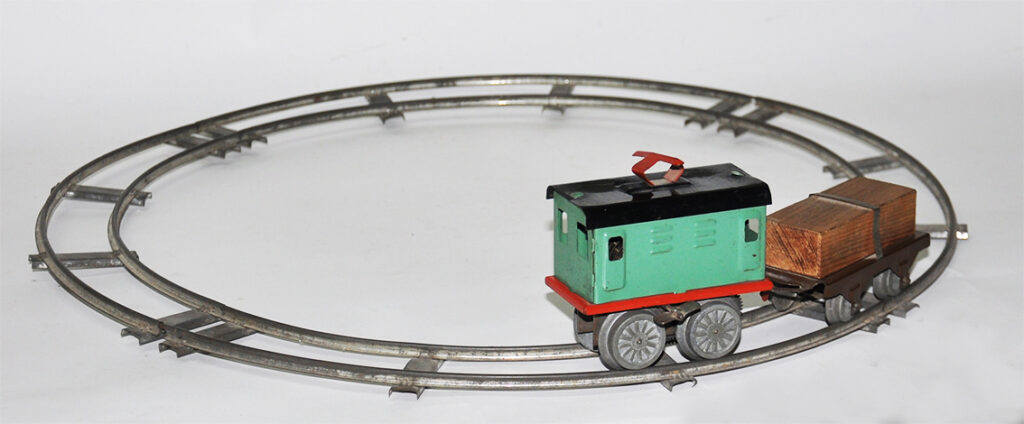
Reidar Werner Bakke established R.W. Bakke, Finmekanisk verksted, in 1946 in a courtyard building at Storgata 26, Oslo. Trained as a turner and toolmaker, he first supplied other workshops, then developed mechanical toys of his own design and made the stamping tools required to produce them. In December 1948, a spring-driven train set with a circular track was advertised as a Christmas gift; the museum account describes it as the first Norwegian toy train of its kind.
From the late 1940s into the 1950s, the workshop expanded its range of trains and vehicles, including trucks, ladder trucks, passenger cars and tractors. Early trains were made of zinc; later models used tinplate and steel. Many toys had wind-up motors and a release mechanism intended to prevent the spring from breaking. Bakke also operated a separate paint shop in Vognmannsgata, and some models carried decals or advertising.
The workshop employed four permanent staff and also outsourced assembly work to home workers. Production commonly ran in batches of about 3,000, and sales reached customers across Norway through an agent. In total, the business made about 200,000 toys. It closed in 1962 amid tighter competition after Norway's toy import restrictions ended and imported plastic toys gained ground. Bakke then worked as a designer and buyer at Tandbergs Radiofabrikk until its closure in 1978, later training and working as a teacher in craft and industrial subjects.